
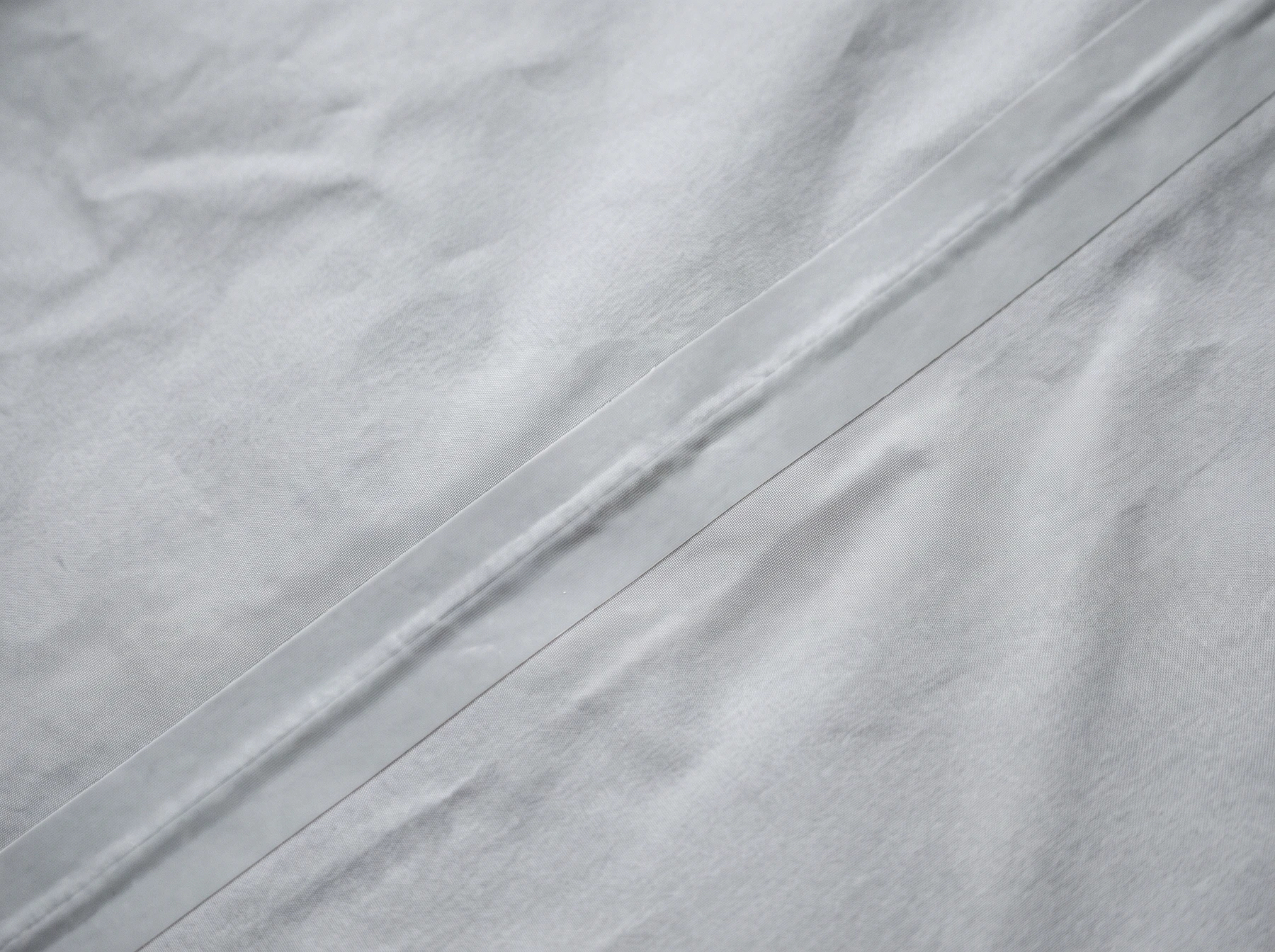
Water-repellent and waterproof describe different requirements. A DWR finish can make droplets bead on a golf jacket's outer surface. A suitable coating or membrane can resist water penetration. To develop a waterproof garment, the seams, zippers and openings also need a compatible construction and approval process.
Start with the weather and the wearer
A lightweight windbreaker for a breezy round and a rain shell for sustained wet conditions are different products. Describe the intended use, fit, movement, packed size and comfort priorities. A wind-resistant material or water-repellent surface should not automatically be described as waterproof.
What does DWR do?
Durable water repellent is a surface treatment that encourages droplets to bead and roll away. It can be used on a lightweight woven shell or on the face fabric of waterproof rainwear. The finish and an underlying waterproof barrier serve different purposes.
Repellency can change with wear, contamination and washing. Review the selected finish, care instructions and performance after the agreed care cycle. A photograph of beading droplets is not a waterproof test.
Is softshell waterproof?
Not necessarily. Softshells often prioritize a supple feel, movement and vapor transfer. Some use bonded backings or a membrane; others rely on a dense face fabric and surface finish. A brushed inner surface may suit a cooler-weather product, but its warmth and bulk need review against the brief.
Specify the construction rather than assuming that every softshell has the same weather protection. Confirm waterproofness, wind resistance or breathability only to the scope supported for the selected material and garment.
What is the difference between a coating and a laminate?
A coating is applied to a base textile. A laminate bonds a membrane to a supporting fabric. Rainwear can use 2-layer, 2.5-layer or 3-layer constructions with different approaches to protecting the inner barrier. Review actual weight, touch, backing, durability and measured performance; layer count alone is not a waterproof rating.
Why do seams and closures matter?
Stitching creates openings in a material. For a waterproof garment brief, review the seam-sealing scope, suitable tape and process, zippers, pockets and other openings. Confirm the feasibility and cost of the proposed construction during development.
A fabric test does not verify the whole garment. Agree the sample and garment-level checks needed for the intended use before approving production.
Which performance results should be compared?
For water penetration, identify the hydrostatic-pressure method, result and conditioning. For moisture-vapor performance, identify the test method and conditions as well. Moisture-vapor transmission and evaporative resistance are different measurements; values from different methods are not directly interchangeable. Air permeability is another separate property.
Review care durability, material identification and report scope. No universal waterproof or breathability figure is assumed for a custom order.
Compare woven and shell materials.
Explore the related manufacturing range.
Discuss your manufacturing project